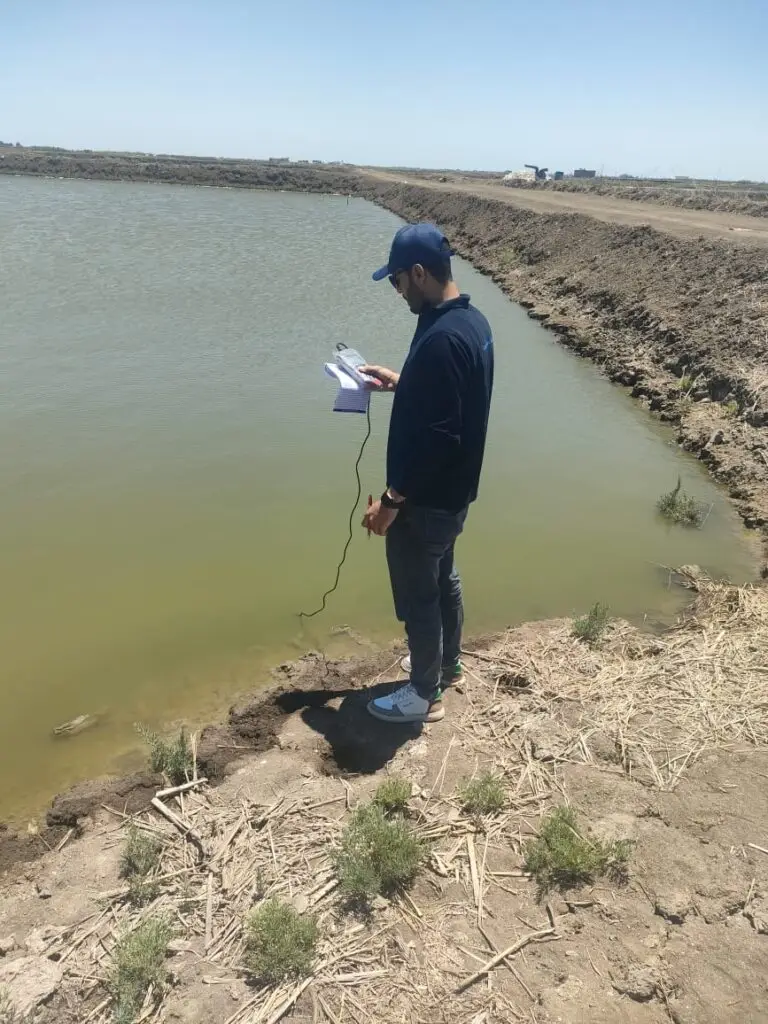
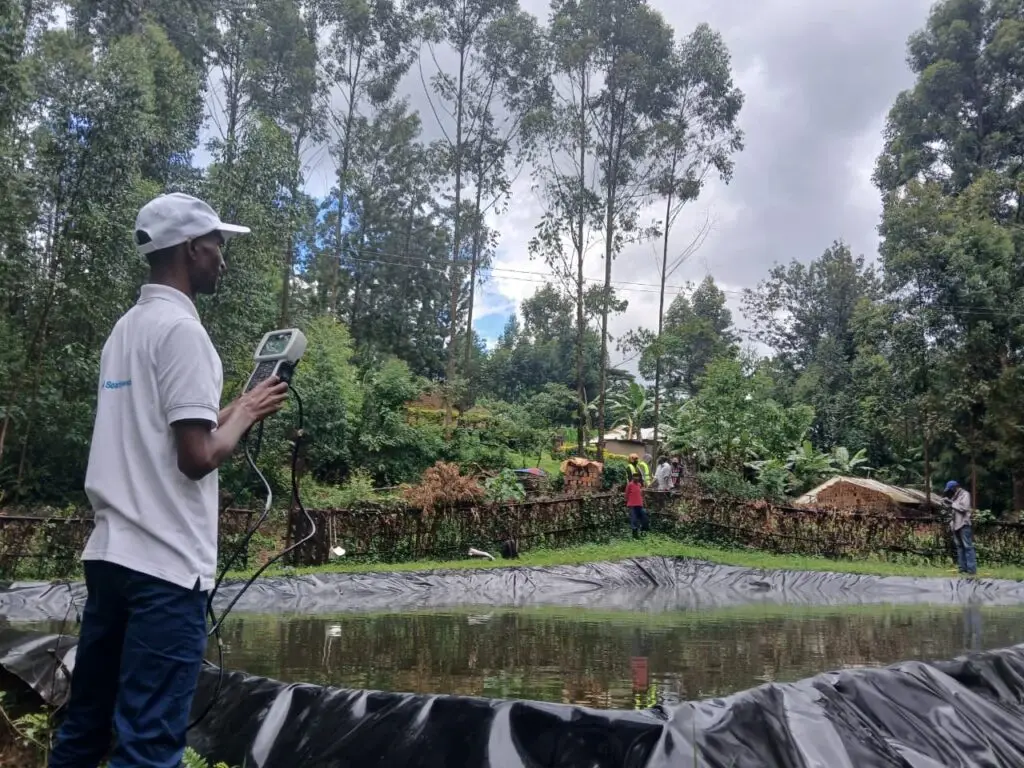
We work directly with farmers to improve conditions for aquatic animals.
To date, we have focused on Nile tilapia, the most farmed species of fish globally. Despite the scale of tilapia farming, there are no laws protecting their welfare in Africa.
We conduct large-scale surveys to assess baseline aquaculture practices on tilapia farms and identify ways to improve welfare. We then train farmers in how to make those welfare improvements.
Examples of recommendations we make include changing water to improve water quality, changing feed quantities, and avoiding handling fish to reduce stress.
We have assessed over 1,000 farms in Egypt – the largest tilapia producer in Africa. Critically, we improved conditions for over 260 million fish.
We have since rolled this programme out in Kenya, where we assessed 40+ farms and trained over 200 farmers. Following training, farmers report fewer fish mortalities and improved productivity.
With enough funding, we hope to roll this programme out in Tanzania, Ghana, Uganda, Nigeria and Zambia soon.